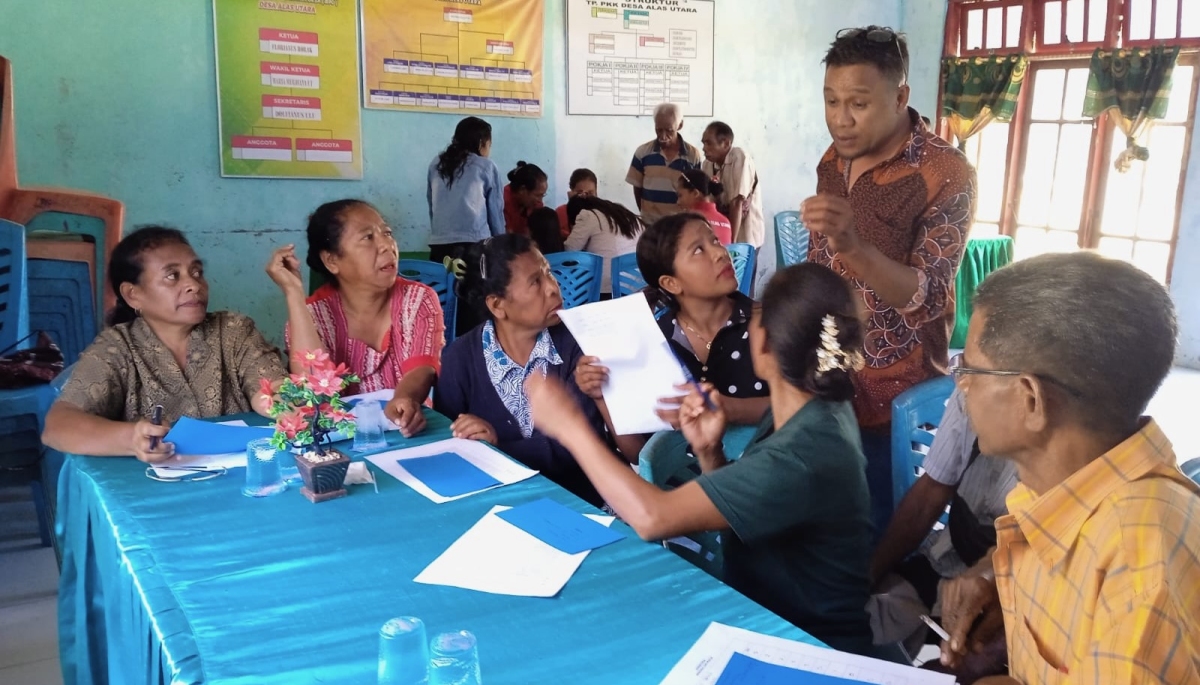
From Understanding Conflict to Finding Solution
NTT, August-September 2026 — Conflict does not always exist in the form of open conflict. Conflicts can start from differences in interests, values, goals, perceptions, and resource limitations. In the context of watershed governance across borders, differences in interests, goals and perceptions and limitations on resources in border communities if not managed properly have the potential to become conflicts. Departing from the needs of the village community obtained from the Participatory Rural Appraisal (PRA) process that has been carried out, Inovasi Tangguh Indonesia (InTI) through the Timor Island Watersheds (TIWA) Program supports capacity building of communities at the borders in managing potential conflicts through Basic Conflict Resolution Training for Community Task Forces (GTK) in eight program target villages in the Talau-Loes and Mota Masin watersheds area, from August 27 to September 5, 2026, with representatives of village communities, village governments, and village stakeholders.
Read More
Transboundary Watersheds Working Group Goes to Villages, Seeing Firsthand TIWA Project Activities
Watershed Management does not only require policies and coordination at the government level. Its implementation also needs to look at the conditions of the communities that live and depend on the watershed area. Therefore, the Transboundary Watersheds Working Group in Belu and Malaka Regencies visit the villages assisted by the TIWA (Timor Island Watersheds) Project this September 2026. This visit is an opportunity for the members of the Working Group (WG) to see firsthand the ongoing activities, meet with the village government, communities, and farmer groups, and discuss the conditions and needs in each village.
Read More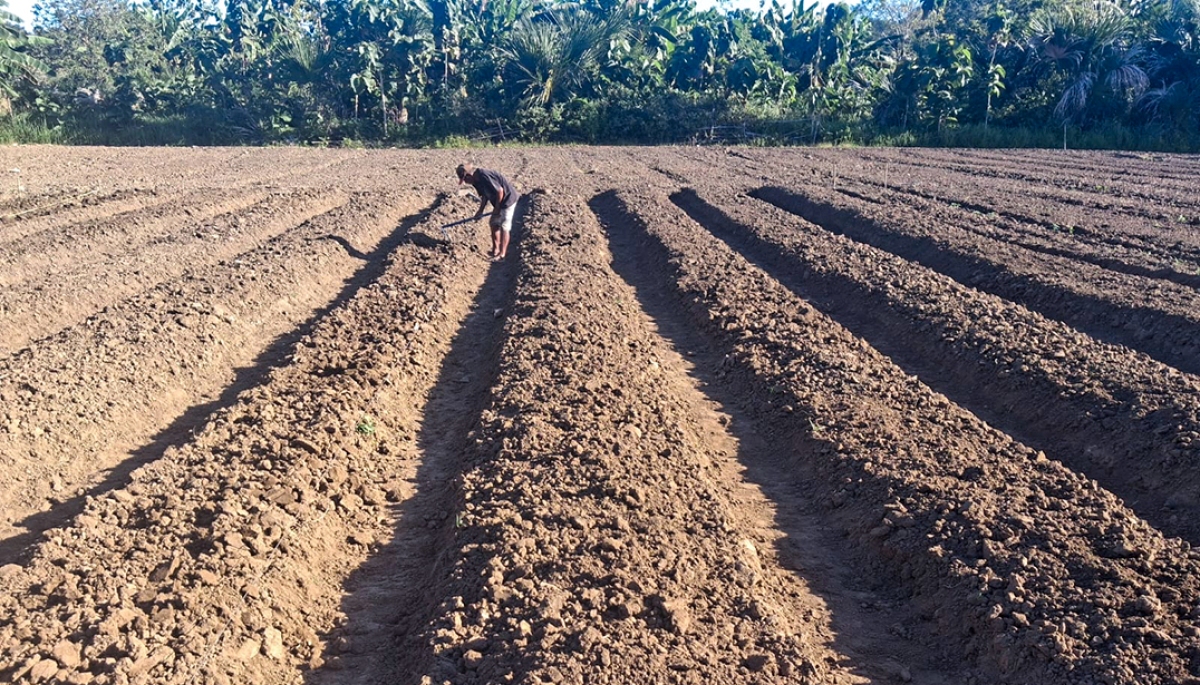
Real Steps in Sustainable Agricultural Practices in Belu and Malaka
Finding the main problem of declining yields is the first step to improving the agricultural sector in the border region. The results of the Participatory Rural Appraisal (PRA) in eight target villages in two districts show that the majority of farmers have not implemented Good Agriculture Practices (GAP). Responding to these findings, the Indonesia-Timor Leste Transboundary Watershed Management Project (TIWA) involving Inovasi Tangguh Indonesia (InTI) and supported by Conservation International (CI) and the Global Environment Facility (GEF), immediately took action through agricultural pilot initiatives in the form of demonstration plots (pilot lands) for vegetable cultivation in a more environmentally friendly and sensitive manner to climate change risks.
Read More
Story from Belu: Defining New Steps for Sustainable Agriculture in Four Villages
What really happens when yields in fields and rice fields continue to decline? This question is often answered with common reasons such as fertilizer scarcity or unpredictable weather. However, the people in Asumanu, Baudaok, Tohe, and Maumutin Villages, Belu Regency, found a deeper picture of the problem. Previously, through the Participatory Rural Appraisal (PRA) process, they mapped the condition of their village and realized that the decline in crop yields was part of a chain of interrelated problems. Behind the low agricultural production, there is the problem of inactive farmer groups, the lack of interest of young people in farming, and environmental threats such as landslides and droughts. Even so, these four villages still have the same potential, namely the availability of spring water sources, strong traditional wisdom, and a variety of local agricultural commodities.
Read More Load more ...