From Mapping Conflicts to Finding Joint Solutions in the Mota Masin Watershed
Malaka, June 12, 2026 — After starting a series of conflict management training for the Transboundary Watershed Working Group in Belu Regency, the Timor Island Watersheds (TIWA) Project has resumed the process of strengthening capacity for members of the Transboundary Watershed Working Group in Malaka Regency. This time, members of the Malaka Regency Transboundary Watershed Working Group gathered to explore how conflicts can be recognized, understood, and managed in the context of watershed management across the borders of Indonesia and Timor-Leste in the Mota Masin watershed.
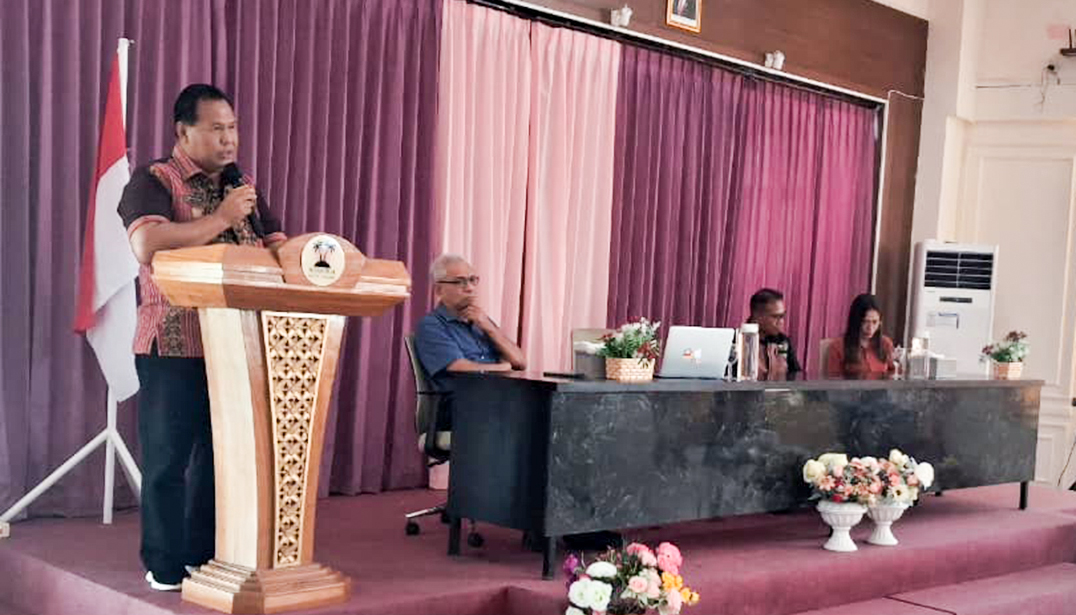
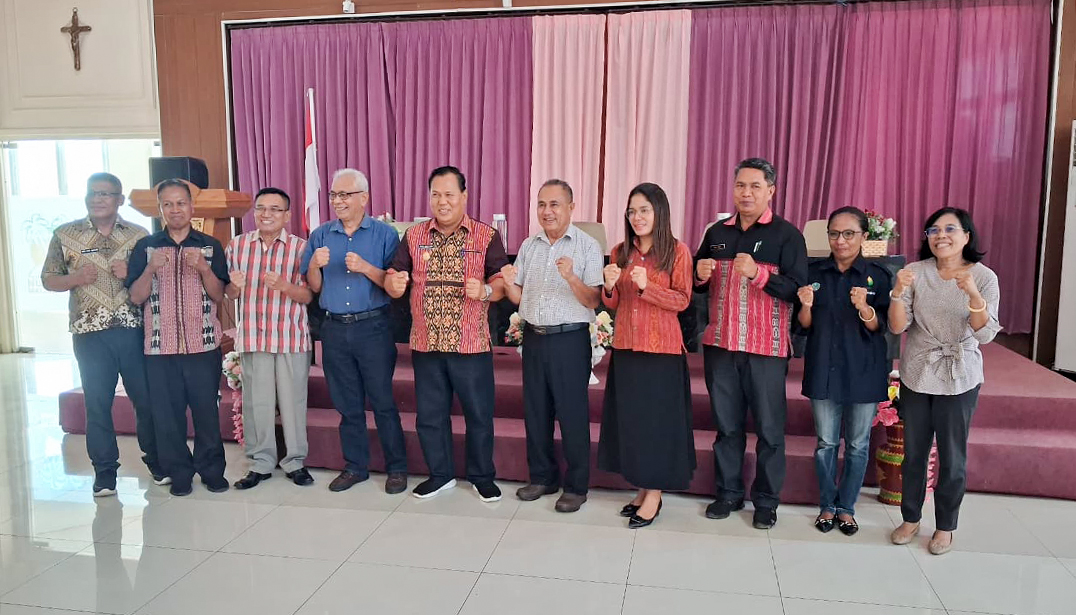
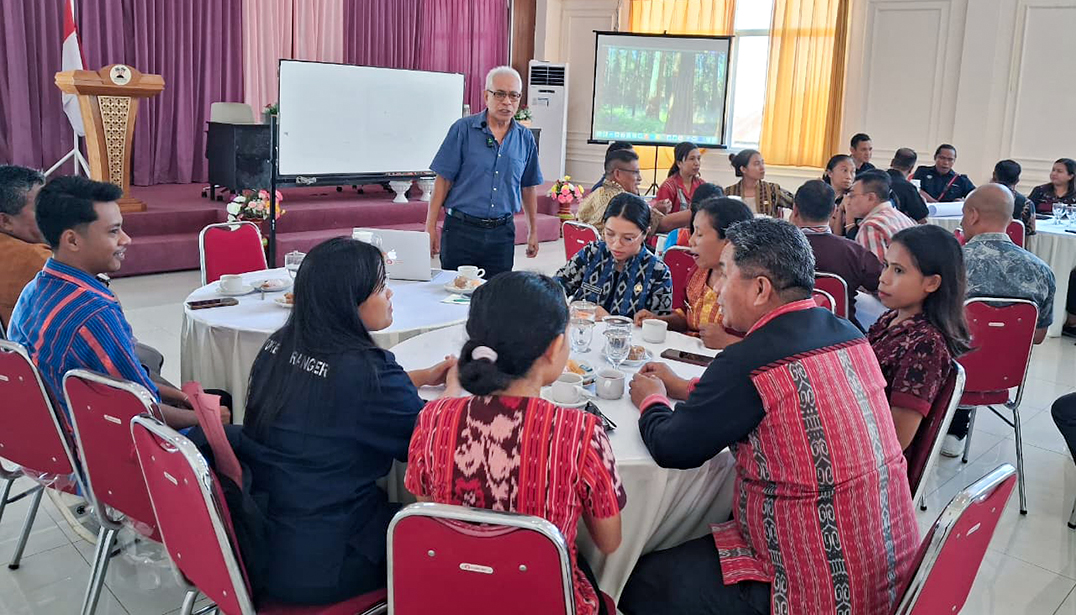
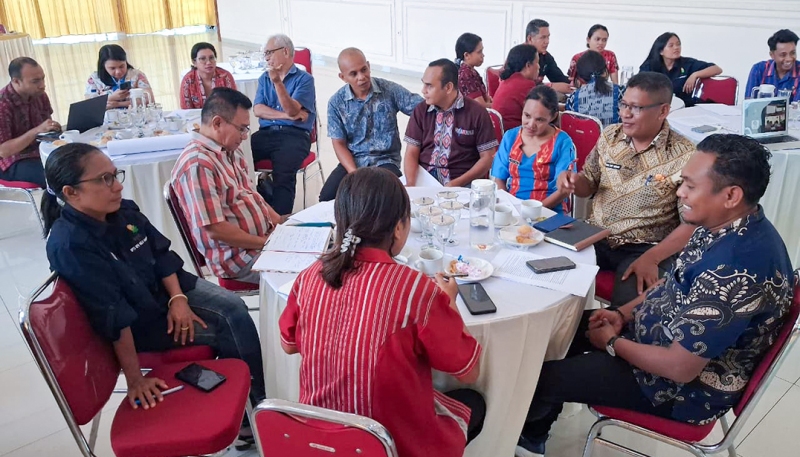
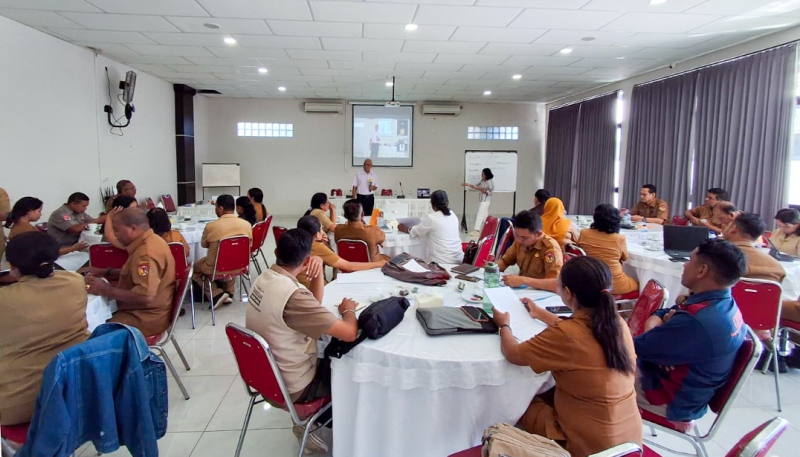
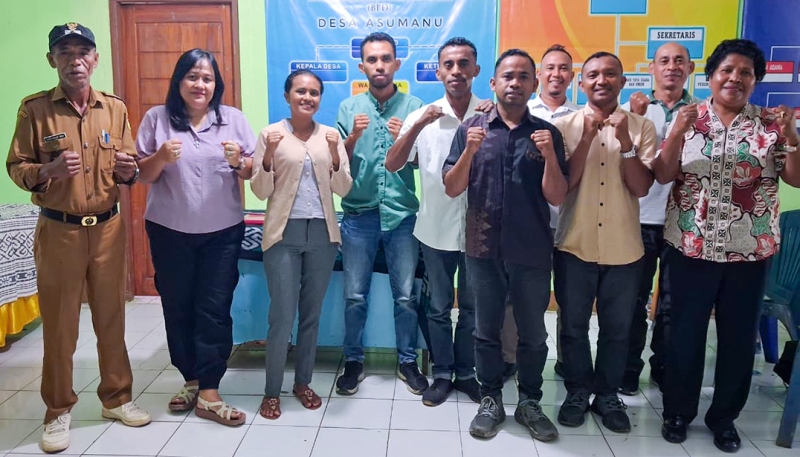
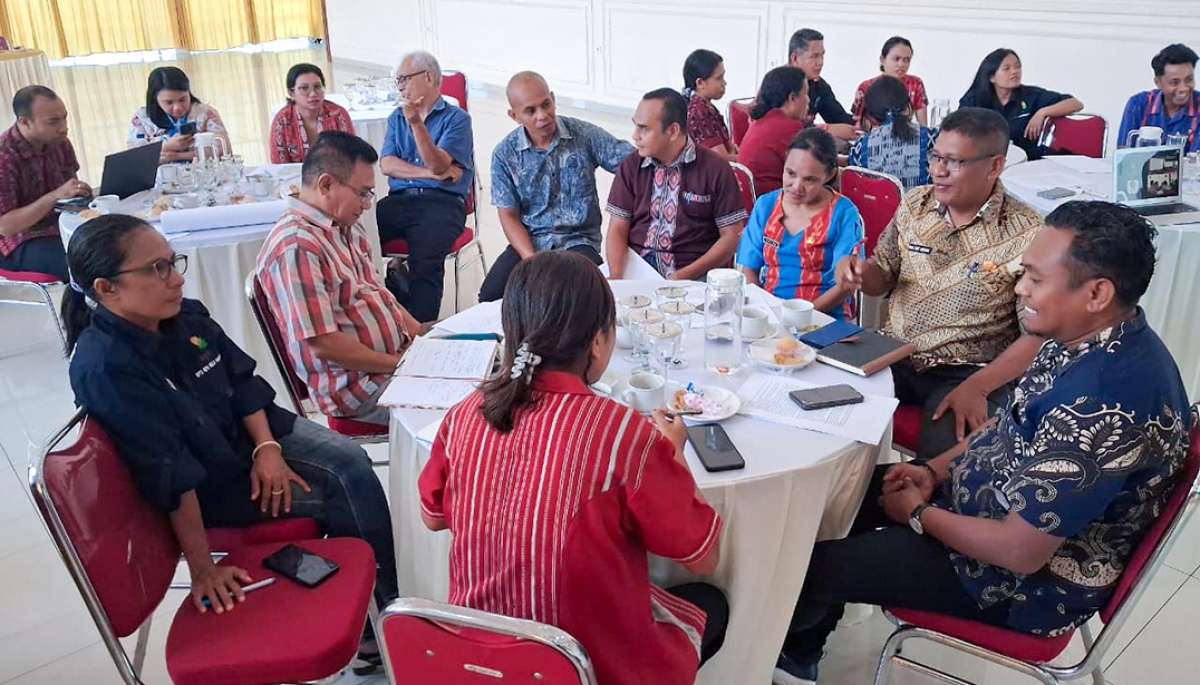
The Basic Training on Conflict Management, Conflict Resolution, and Peace Development, organized by Inovasi Tangguh Indonesia (InTI) on June 12, 2026, was attended by 42 participants from various regional apparatus organizations and related institutions in Malaka Regency. Also present were the Deputy Regent of Malaka, Henri M. Simu, Head of Bapperida, BPBD, KPH Forestry Belu-Malaka, and other members of the Transboundary Watershed Working Group of Malaka Regency.
Opening the activity, Technical Lead Indonesia from InTI, Johan Rachmat Santosa, reminded that discussions on watershed governance cannot be separated from natural resource governance which has the potential to cause conflicts, especially in border areas that have strong social and cultural ties despite being in two different countries.
"When talking about watershed governance, we always intersect with natural resource governance that can cause conflicts. Especially when in the context of the Mota Masin watershed, we are talking about communities around the border of Indonesia and Timor-Leste who are customarily brothers and share natural resources together in their livelihood and livelihood practices, but administratively the country lives in two different countries that are very likely to have different policies related to natural resources."
According to Johan, the success of transboundary watershed management is highly dependent on the commitment of the parties to ensure that the programs carried out can provide benefits to the community without causing new conflicts.
In line with this, the Deputy Regent of Malaka, Henri M. Simu emphasized that rivers and water resources do not know administrative boundaries or state boundaries. Therefore, watershed management requires coordination, collaboration, and participation of all parties and must be oriented to the needs of the community.
"The management of border watersheds requires coordination, collaboration, and participation of all parties, and is oriented to the needs of the community."
He also reminded that conflicts can arise due to differences in access to resources. However, if managed properly, conflicts can become an opportunity to find better solutions in watershed management.
Reading the Conflict from the Perspective of Malaka
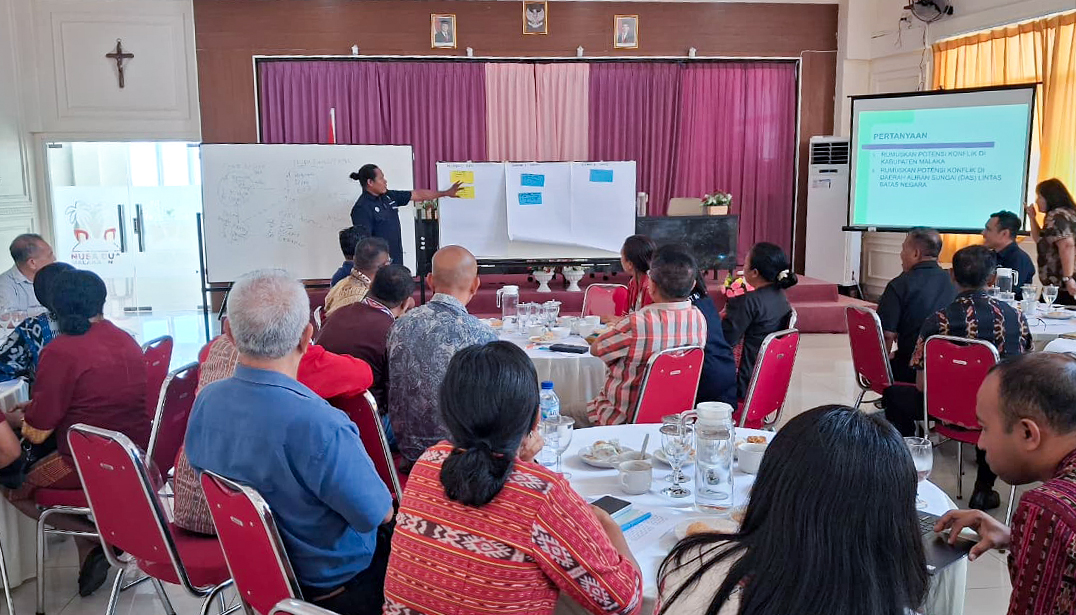
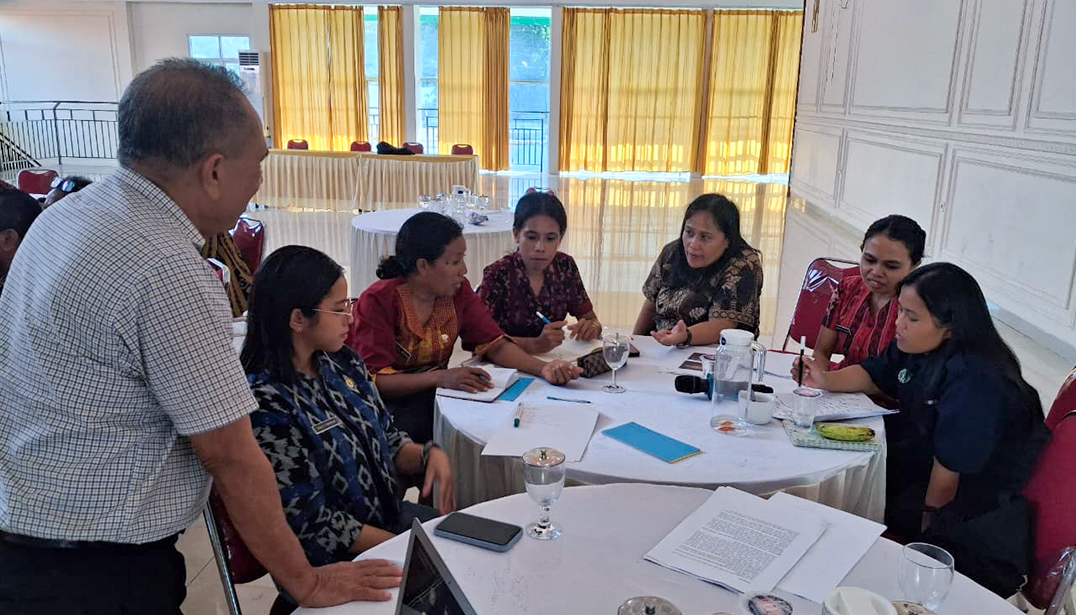
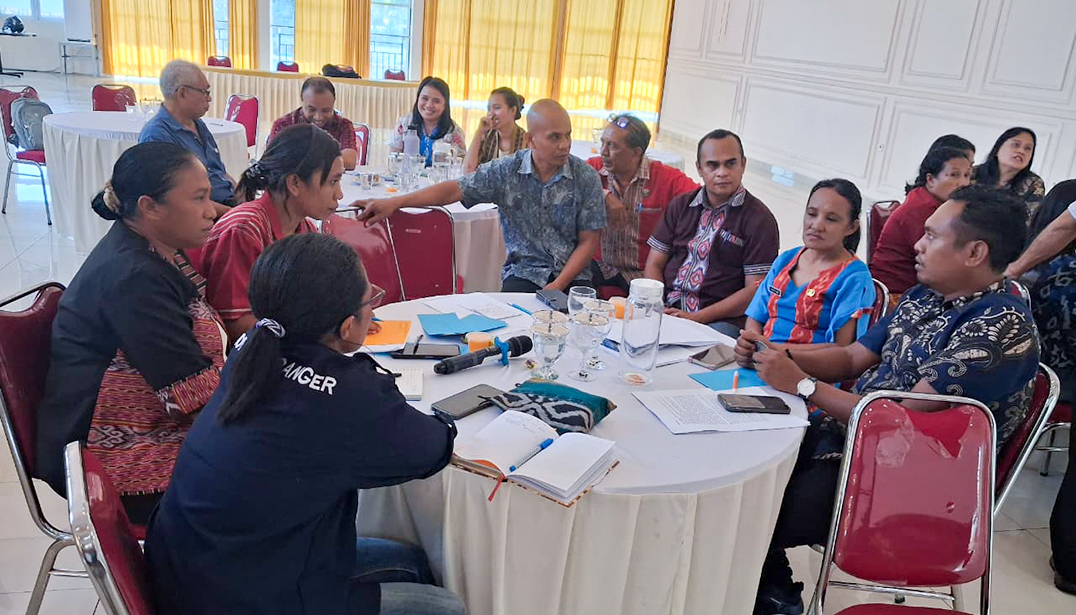
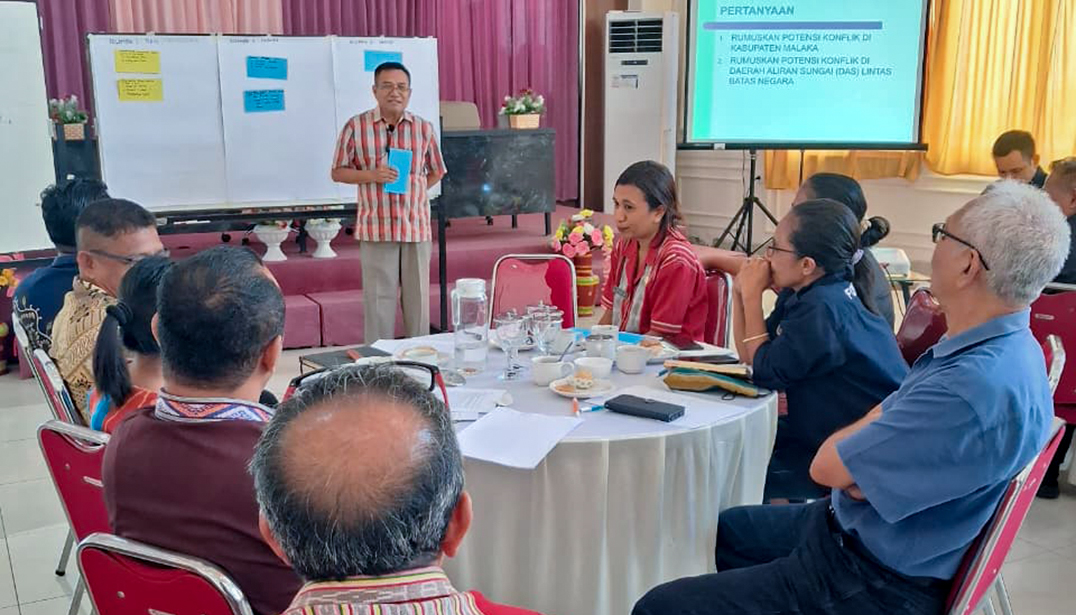
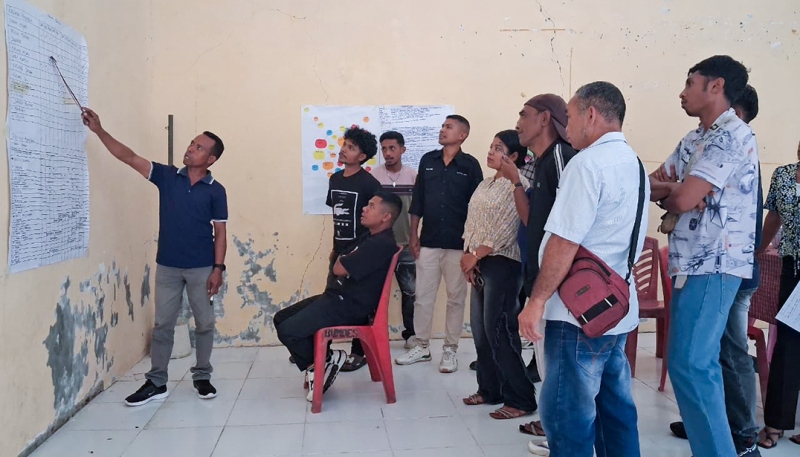
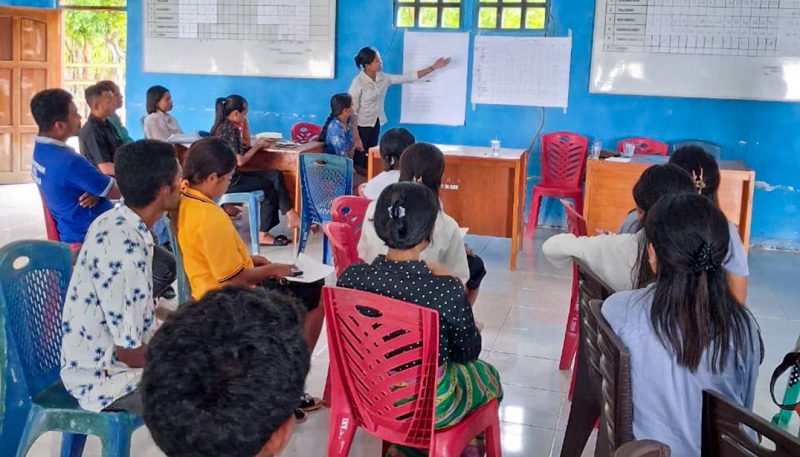
As was conducted in the training in Belu, participants in Malaka were invited to map various potential conflicts they encountered in their areas. The results of the discussion show that the issue of land ownership is still one of the most frequent problems. In addition, participants also highlighted political conflicts, conflicts between community organizations, and social issues related to martial arts organizations.
When the discussion was directed to the context of cross-border watersheds, participants identified a number of challenges that have cross-border dimensions, such as illegal crossers, illegal shipments of goods, theft of livestock in border areas, and territorial boundary issues that have not been uniformly understood by the community. The findings show that Transboundary watershed management is not only related to environmental and natural resource aspects, but also intersects with the evolving social dynamics in border areas.
From Conflict to Better Governance
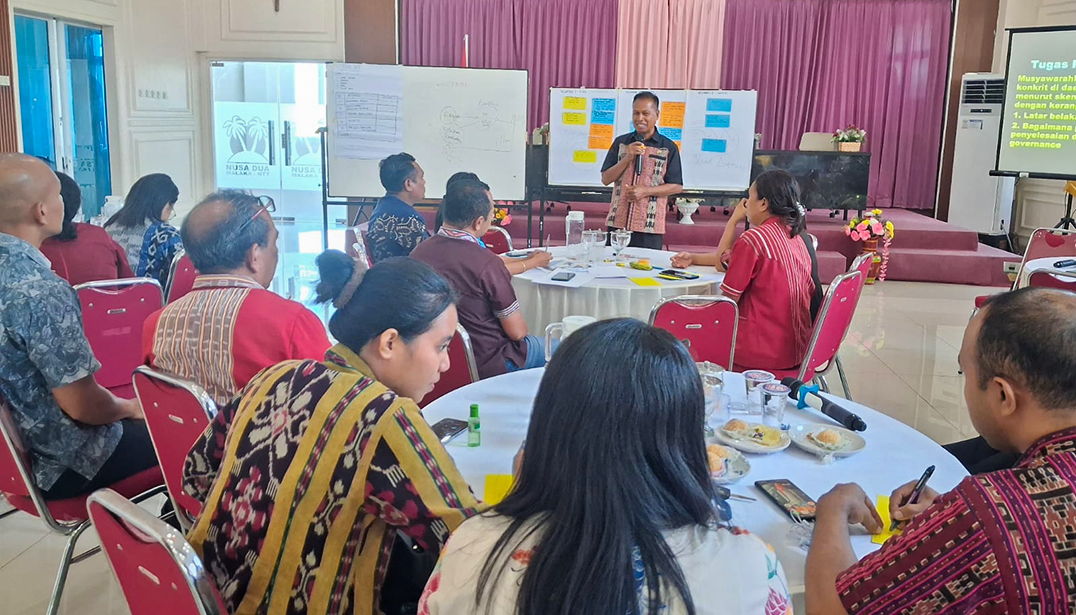
The training facilitated by Pius Rengka did not stop at problem identification. Participants were also invited to discuss the root of the problem behind the conflict and formulate an approach to solving it through a governance perspective. In the case of land disputes, for example, participants identified various forms of disputes that can occur between communities and companies, communities and states, and between community groups. Various settlement approaches were then discussed, ranging from the family approach, the protection of community rights, to the use of available legal mechanisms.
The discussion also emphasized the importance of building a dialogue space that allows all parties to be involved in the conflict resolution process.
"Information transparency, dialogue between parties, and joint decision-making are important elements in resolving natural resource disputes."
In addition, participants assessed that conflict resolution cannot rely solely on one approach. Mediation, negotiation, and the involvement of various interested parties are an important part of building a more sustainable understanding.
"Conflicts are not always resolved through a legal approach. Dialogue, mediation, and negotiation are important parts of building understanding between the parties."
Other groups highlight conflicts between organizations that are influenced by a lack of understanding of organizational functions, limited employment, erroneous solidarity, and problems that are not resolved for a long time. To prevent conflicts from developing further, participants proposed the importance of integrated coaching involving the government, community leaders, religious leaders, and traditional leaders. Participants also emphasized the importance of coordination between organizational leaders, customary institutions, and religious institutions in preventing and alleviating social conflicts that occur in the community.
Keeping the Learning Process Ongoing
In the final session, participants conveyed a number of follow-ups that are considered important to strengthen conflict management in Malaka Regency. Among them are the need to strengthen the role and legality of customary institutions, the establishment of communication forums across organizations and governments, the formation of integrated teams, and coordination meetings that are held regularly.
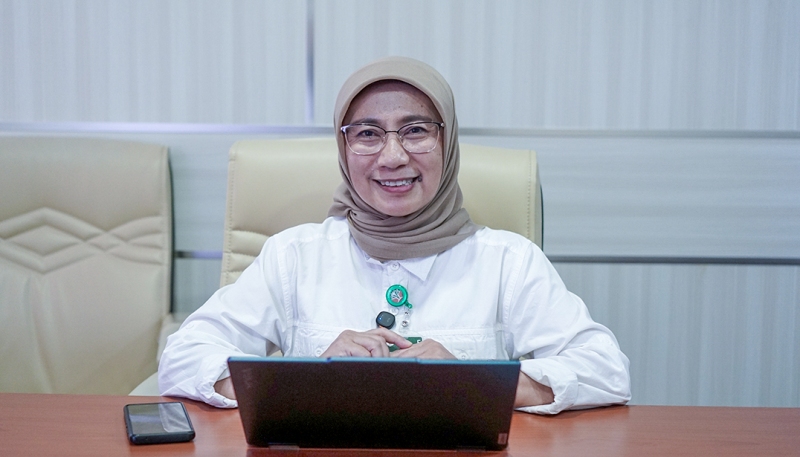
Closing the activity, the Chairman of the Malaka Regency Transboundary Watershed Working Group and Head of the Malaka Regency BPPD, Wendelinus Y. Un, said that this training provided a new perspective for the participants to understand the social dynamics that develop in the community.
"Today's activity opens our horizons to know and understand social conditions better, especially regarding the conflicts that exist around us."
According to him, this understanding is an important provision for members of the Transboundary Watershed Working Group in carrying out their role in the midst of various dynamics that develop in the border area.
He also hopes that the participants involved in the next series of activities will still come from the same element so that the learning process and information exchange can continue in each OPD involved.
"I hope that the next meetings will still involve the same participants so that information is not interrupted and the learning process can continue."
Furthermore, the evaluation and feedback submitted by the participants showed a positive response to the implementation of the training. In addition to proposing that similar activities be carried out in a sustainable manner and involving more stakeholders, participants also appreciated the facilitation process which was considered interactive, communicative, and easy to understand. Participants assessed that the delivery of material that was close to the local context helped them better understand the concept of conflict management. The open discussion space also allows participants to share experiences, discuss various problems faced in the field, and discuss alternative solutions that can be applied in the context of their respective regions. (InTI)